
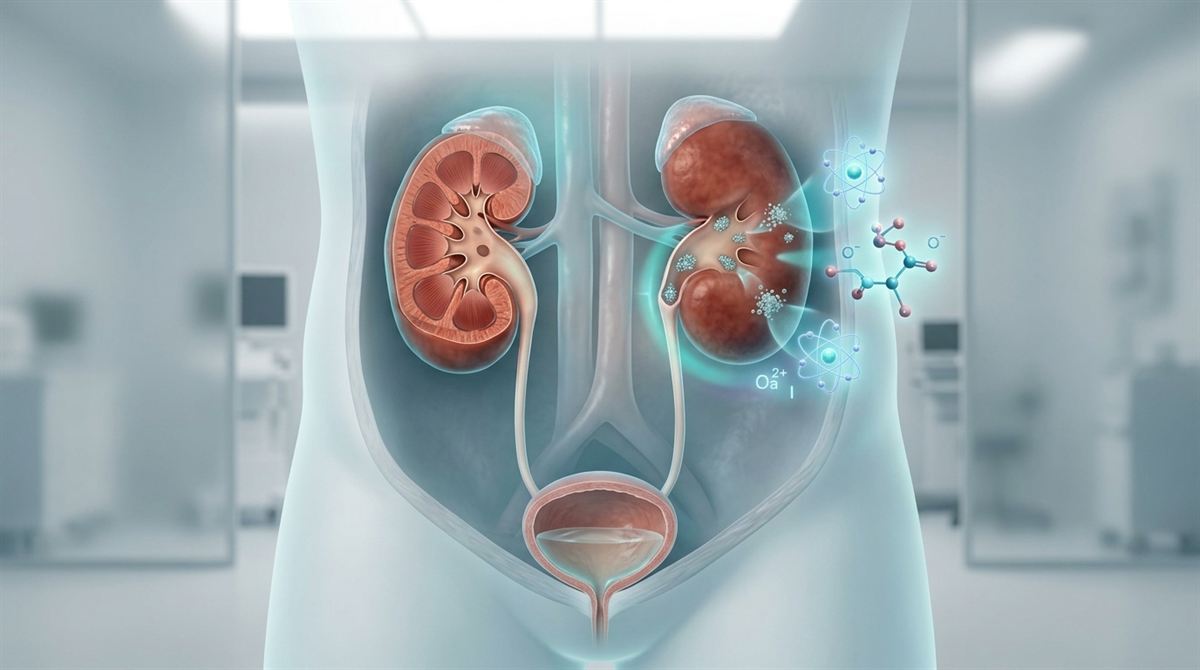
1. The Epidemic of Recurrent Renal Calculi
Kidney stone disease (nephrolithiasis) is notorious for producing some of the most excruciating pain known to medicine—acute renal colic. In Punjab and Northern India's 'stone belt', extreme summer heat, dehydration, and dietary habits create a fertile environment for urinary mineral supersaturation.
While urologists excel at surgically removing obstructing stones through laser lithotripsy or PCNL, surgery does nothing to treat the underlying biochemical disorder. Without metabolic investigation, over 50% of stone formers suffer another stone episode within five years, risking cumulative renal scarring and chronic kidney disease.
2. Understanding Stone Chemistry: The 4 Major Types
- Calcium Oxalate Stones (75–80%): Form when urine becomes supersaturated with calcium and oxalate, often aggravated by dehydration and low urinary citrate (a natural crystal inhibitor).
- Uric Acid Stones (8–10%): Form in persistently acidic urine (pH < 5.5). Strongly associated with gout, metabolic syndrome, obesity, and high animal purine intake. These stones are radiolucent (invisible on plain X-rays).
- Struvite / Infection Stones (5–8%): Rapidly growing 'staghorn' calculi caused by chronic urea-splitting bacterial urinary infections (e.g., Proteus mirabilis).
- Cystine Stones (< 1%): A rare genetic metabolic disorder causing renal tubular wasting of the amino acid cystine.
3. The Comprehensive 24-Hour Urine Metabolic Profile
For any patient who has suffered multiple kidney stones, a stone at a young age, or a single stone with solitary kidney anatomy, a 24-Hour Urine Metabolic Evaluation is mandatory. This test measures:
- Total Urine Volume: Verifying if the patient is producing at least 2.0 to 2.5 liters of diluted urine daily.
- Urinary Calcium: Identifying idiopathic hypercalciuria or underlying primary hyperparathyroidism.
- Urinary Oxalate: Detecting hyperoxaluria from excessive dietary oxalates or gut malabsorption.
- Urinary Citrate: Citrate is the kidney's natural chemical defense; it binds calcium and prevents crystal agglomeration. Low citrate (hypocitraturia) is a major correctable defect.
- Urinary Uric Acid & pH: Determining whether urinary alkalization therapy is required.
4. Evidence-Based Dietary Rules for Stone Prevention
Based on your metabolic stone analysis, the following protocols prevent crystal aggregation:
- Hydration Benchmark: Drink enough water to produce a minimum of 2.5 liters of crystal-clear urine daily. Keep a glass of water on your bedside table and drink if waking up at night.
- Moderate High-Oxalate Foods: Spinach (palak), nuts (almonds, cashews), beets, chocolate, black tea, and wheat bran are rich in oxalates. Consume them alongside calcium-rich foods (e.g., yogurt or paneer) so calcium binds oxalate in the stomach before reaching the kidneys.
- Slash Dietary Sodium: High sodium intake forces the kidneys to excrete more calcium into the urine (hypercalciuria), directly feeding stone growth. Keep salt under 2,000 mg/day.
- Lemon Water Therapy (Natural Citrate): Squeezing fresh lemons into your daily water provides natural citrate, raising urine pH and dissolving uric acid crystals.
Nephrologist's Clinical Pearl — Dr. Fayaz Ahmad Wani
"A kidney stone is not an isolated surgical event—it is a metabolic warning signal from your kidneys. If you have passed a stone, never simply throw it away. Have it sent for biochemical stone analysis, and undergo a 24-hour urine evaluation. With targeted medical therapies like potassium citrate or thiazides, we can make your urine completely inhospitable to stone formation."
5. Medical Pharmacotherapy for High-Risk Stone Formers
When dietary modifications alone are insufficient, nephrologists prescribe targeted medications:
- Potassium Citrate: Alkalinizes urine and replenishes natural crystal inhibitors, highly effective for uric acid and hypocitric calcium stones.
- Thiazide Diuretics (e.g., Chlorthalidone): Enhances calcium reabsorption in the renal distal tubules, dropping urinary calcium excretion by up to 50%.
- Allopurinol or Febuxostat: Lowers serum and urinary uric acid levels in patients with recurrent uric acid calculi.
📚 Peer-Reviewed Clinical References & Guidelines
- American Urological Association (AUA) Guideline: Medical Management of Kidney Stones ↗
- National Kidney Foundation (NKF) - Kidney Stone Diagnosis & Prevention Guide ↗
- Journal of the American Society of Nephrology (JASN): 24-Hour Urine Chemistry in Recurrent Nephrolithiasis ↗
- Fortis Escorts Hospital Amritsar - Stone Prevention & Nephrology Clinic ↗
Frequently Asked Patient Questions
Can drinking beer dissolve kidney stones?
No, this is a dangerous popular myth! While beer acts as a mild diuretic increasing urine frequency, alcohol dehydrates the body rapidly, spikes serum uric acid, and actually accelerates stone recurrence.
What size kidney stone can pass naturally on its own?
Stones smaller than 4 to 5 mm have an 80% chance of passing naturally through urination with high fluid intake and medical expulsive therapy (e.g., Tamsulosin). Stones larger than 7-8 mm rarely pass spontaneously and typically require urological intervention.
Can kidney stones lead to permanent chronic kidney disease?
Yes. An obstructing stone that blocks urine flow for more than 2-4 weeks creates severe backpressure (hydronephrosis) and parenchymal atrophy, which permanently destroys kidney tissue if not relieved promptly.
Related Kidney Health Articles
How Much Water Should You Drink for Kidney Health? Truth vs. Myths
Read Full Guide → Recommended ReadingHigh Uric Acid & Gout: Breaking the Cycle of Renal Urate Damage
Read Full Guide → Recommended Reading10 Early Warning Signs Your Kidneys Need Immediate Attention
Read Full Guide →"Medical education empowers patients to make informed, life-saving choices. When we catch kidney decline early, modern nephrology has the tools to protect your kidneys for decades."
— Dr. Fayaz Ahmad Wani
MD (General Medicine), DM Nephrology (Osmania Medical College)
Senior Consultant Nephrologist & Kidney Transplant Specialist
Fortis Escorts Hospital ↗ & Primus Medicare, Amritsar
Medical Disclaimer: This article is for general education and is not a substitute for personal medical advice, diagnosis or treatment. In an emergency call 112.